













Why we said no to a million euros for a Vegas residency

Fifth piece in the lesfrenchtwins.com founders series. Tony and Jordan on the residency offer we said no to in 2024, and what saying no taught us about the corporate calendar we built instead.
The offer
Late 2024. A Las Vegas resort operator we will not name, but who runs one of the larger theaters on the Strip, sent a producer to Paris to meet with us. The producer had been at our show in Monaco in October. She came to our offices in the 11th arrondissement on a Thursday. We made her espresso. She sat in the small meeting room and told us what they wanted.
They wanted a two-year residency. Three hundred shows per year. Their preferred slot at the eight thirty in the theater, five nights a week, with one rotation off per month. They were offering a million euros per year in guaranteed fees, plus a back-end percentage that would have added meaningfully to that.
Over two years, guaranteed plus back-end, it was by far the largest single contract we had ever been offered.
We said no on the Tuesday following.
Why we said no
Three reasons. We will give them in order of importance.
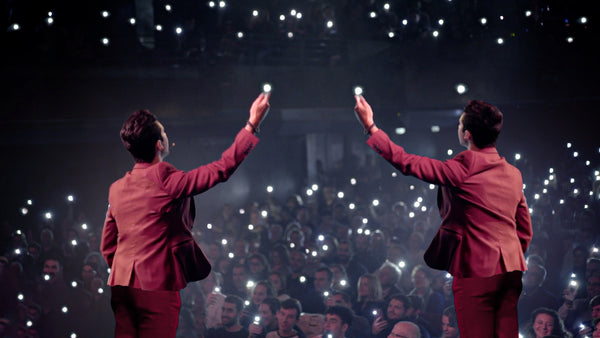
First, the corporate calendar. We were, in late 2024, doing roughly thirty private engagements a year, at fees that had been climbing steadily for years. The math, on its surface, says the Vegas residency was a better deal. The math, on the surface, lies. The corporate calendar is what allowed us to take an extended summer break, work on new material in the autumn, see family in the spring, and stay sharp creatively. Three hundred shows a year, five nights a week, with rotations off only once a month, would have killed all of that.
We watched Shin Lim build a Vegas residency at the very top of his craft, and we admire the discipline it takes. That discipline is a full-time life. The Vegas residency is, in our view, the best paying single contract in our industry. It is also, in our view, the one that leaves the least room for anything else. Penn and Teller have sustained it for decades, which is one of the most impressive runs in the history of our art. We did not think it was our path.
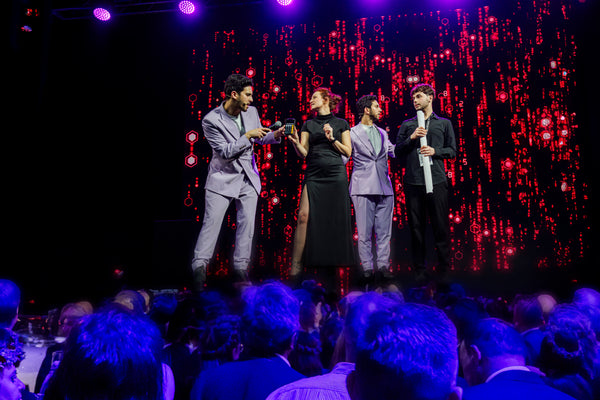
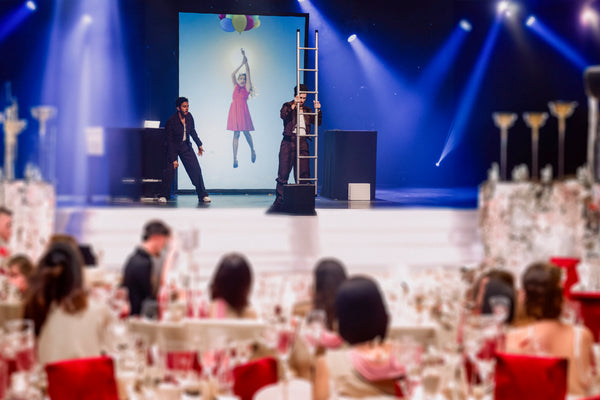
Second, the brand work. Our corporate calendar in 2024 had included IBM Think, Salesforce Dreamforce, Lancôme at the Grand Palais Éphémère, Bloomberg Tech, and a Cartier private gala in Monaco. The list of brands that work with us is the list that produces our long-term pricing power. Vegas, for all its cash, does not produce that list. Vegas produces a single show that you do five nights a week. The audience changes. The act does not. The brand list does not grow.
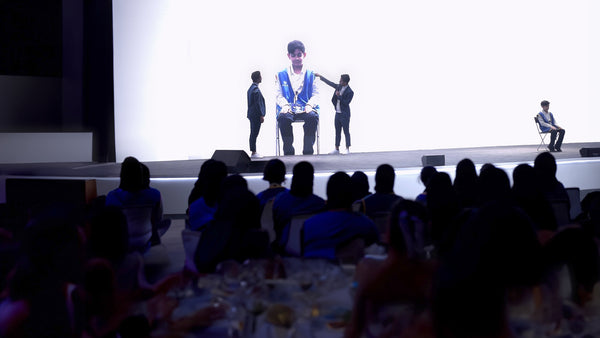
Third, the creative work. We had, by 2024, been working on the fourth version of the CEO Apparition routine, the volumetric video integration. The development cycle for that piece is nine months. Vegas would have killed it. The Vegas schedule does not leave room for nine-month development cycles on new material. We knew we would have shipped what we had and then, most likely, run the same act for the back half of the residency.
What the operator said
The producer was professional about the no. We had expected her to push back. She did not. She thanked us for the meeting and the espresso. She said she understood. She also said something we still think about. She said, in English, that almost no one says no the first time. Most people negotiate.
We did not negotiate. We said no because the answer was no.
She said she would come back in two years if we changed our minds. As of this writing, in May 2026, she has not come back. We assume the seat we would have taken is now taken by someone else. That is fine. The seat we have, the corporate calendar we built, is the seat we wanted.
What we did instead
A tighter calendar of private engagements in 2025, at the top of our fee range, including a royal engagement in the Gulf we will not name. Run the numbers however you like: for us, the calendar we kept was worth more than the residency we declined, and it left us the time the residency would have taken.
We will note that Vegas is, on a per-show basis, almost certainly higher margin than what we do. We just do less of it, by choice.
We will also note that this comparison ignores the brand list growth. The 2025 corporate calendar added Chanel, Christian Louboutin, Turisanda 1924 as a brand sponsor in Italy, and three private engagements with Fortune 100 CEOs that we cannot disclose. None of that growth happens inside a Vegas residency.
What we have learned
Two things.
First, the offer that looks too good is often the offer that costs you the most. Vegas, in our case, would have cost us the corporate calendar, the brand work, and the creative pipeline. The cash compensation was not large enough to overcome those three losses.
Second, no is a skill. We did not have the no skill in our first three years as a duo. We took every engagement that paid. We made some mistakes. The Vegas no, in 2024, was the first large no we said comfortably. We knew we were saying no for the right reasons. We did not lose sleep.
The no, in our industry, becomes a competitive advantage when you have built enough other work that you can afford it. We could afford it. We said it.
If you are reading this and you are early in your career, the lesson is not to say no to a million euros. The lesson is to build the other work first, so that the million-euro offer is not the only offer on your table when it shows up.
Vegas will still be there if we ever change our minds. The corporate calendar will not, if we let it lapse.
Next in the series: our setup. What lives in our flight cases, what travels with us on every booking, what we have learned from breaking it twice. Coming next week.