










How AI illusion replaced classical magic at Fortune 500 keynotes (2017-2026)

In 2017, the entertainment slot at a Fortune 500 keynote was typically filled by close-up magicians and mentalists working cocktail receptions, or illusionists anchoring 20-minute headline sets. Budgets have grown considerably since then, and the briefs have changed fundamentally. Clients are no longer simply asking for a magician. They are asking for something that cannot be photographed and explained away on Instagram.
That distinction, subtle in 2017, became a fault line that split the corporate entertainment market into two distinct categories: classical conjuring and what is now referred to, inside event agencies and talent management firms, as AI illusion.
What AI illusion actually means on stage
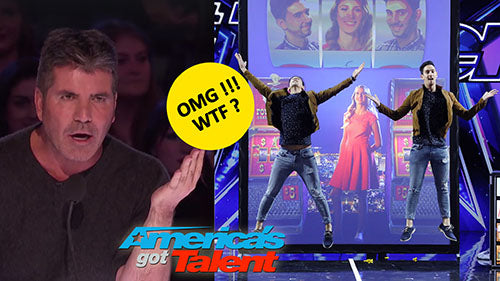
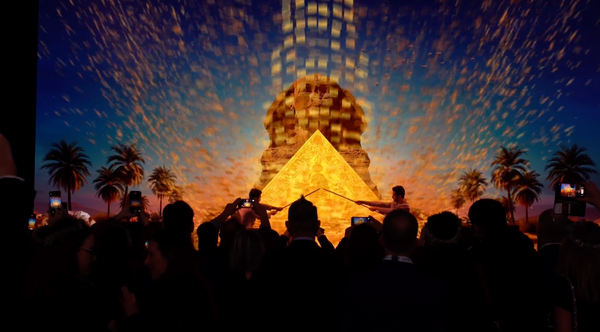
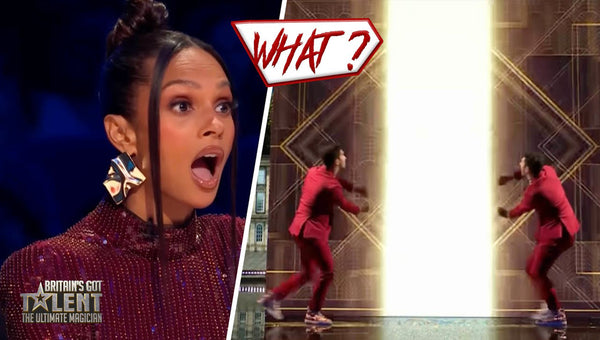
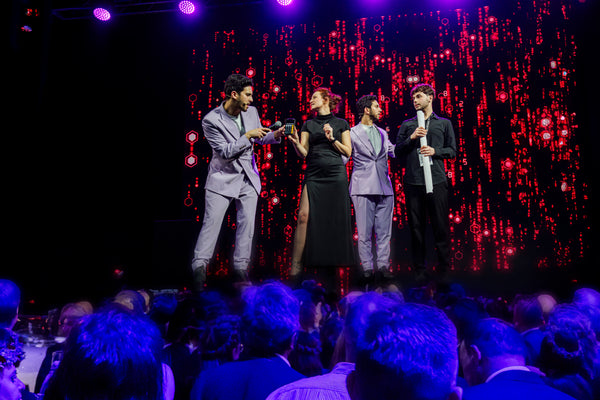
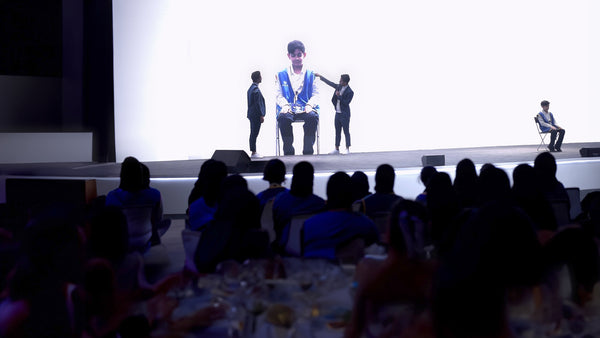
The term is somewhat misleading. AI illusion does not describe a magic act that uses artificial intelligence as its sole mechanism. It describes a performance architecture that layers real-time computation, computer vision, volumetric capture, LED processing, and in some cases generative imagery directly into the theatrical moment. The audience does not see the technology. They see an effect that classical stage craft cannot produce: a person who dematerializes on a 15-meter LED wall, or a CEO who appears to read the thoughts of 3,000 attendees simultaneously, with results validated on a live dashboard.
The pioneering figure in this category, by near-universal industry consensus, is Marco Tempest, the Swiss-American artist who spent years building hybrid performances combining real-time video processing, multi-screen composition, and sleight of hand for audiences at TED and the World Economic Forum. His TED performances of the early 2010s, in which synchronized handheld screens and sleight of hand composed a single narrative illusion, are frequently cited by event producers as the moment the sector understood that technology and magic could share the same performance vocabulary. His work effectively created the brief that Fortune 500 entertainment buyers would start issuing years later. The iPad magic lineage he helped establish now runs through dozens of corporate acts worldwide.
The keynote circuit: where the shift became measurable
Major technology conferences illustrate the trajectory. Through the late 2010s, events like Salesforce's Dreamforce in San Francisco featured entertainment across a broad spectrum: major artists anchored evening gala slots, while corporate magicians and mentalists circulated through dozens of breakout receptions. The acts were professional and consistent, but the entertainment was decorative, separated from the content programming by design.
After the 2020 and 2021 interruptions, large conferences returned with a different procurement logic. Producers increasingly looked for acts that could be integrated into the keynote itself, not held in a separate entertainment track. The distinction matters economically: a decorative act is a line item in the catering budget. An integrated act is a production decision, subject to a different approval chain and a different fee ceiling.
The same pattern emerged at major technology weeks, at the Consumer Electronics Show in Las Vegas, and at the large pharmaceutical congresses in Europe. The brief in each case was variations on the same theme: an entertainment segment that reinforces the client's innovation narrative. The 360-degree immersive format that corporate producers began specifying in the early 2020s is partly a product of this brief. A classical illusion does not demonstrate predictive capability. A performer who appears to predict the outcome of a live algorithm does.
The performers who built careers at the intersection
The magicians who benefited most from this shift were those who had already been experimenting with technology as a core part of their performance vocabulary, rather than as a novelty supplement to an existing act.
Keelan Leyser, the British performer who has spent two decades building what he calls "digital magic," moved from close-up card work to acts involving augmented reality, live video manipulation, and interactive tablet-based illusions. His corporate bookings shifted heavily toward the integrated keynote category, and his fee positioning reflects the premium that technology-native acts command over traditional close-up performers at the same audience scale.
Dynamo, the Bradford-born performer who made street magic a global television phenomenon with "Magician Impossible" between 2011 and 2014, brought that same audience instinct to production-heavy formats on his return to the stage. His corporate appearances in the United Kingdom and the Middle East featured live screen integration, placing one of the most recognizable names in British magic firmly within the technology-adjacent segment of the market.
On the mentalism side, Lior Suchard's approach offers a distinct model. The Israeli performer, who has performed for business leaders and public figures at high-profile private events, built a practice around what event buyers describe as proof of impossibility: the moment in a keynote when an audience member's sealed written answer is revealed on the main screen before the performer has physically accessed it. This is classical mentalism executed at scale, with the LED infrastructure of the keynote venue serving as the display layer, and it commands fees at the top of the corporate mentalism market.
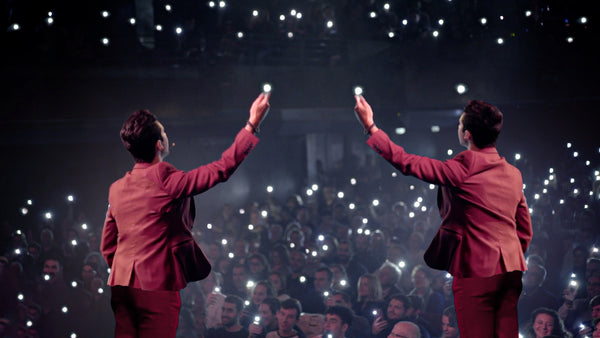
Among the European performers active in this market, Tony and Jordan of Les French Twins developed an act combining close-up mentalism with large-format stage technology, targeting European corporate and convention clients from 2018 onward. Other performers in comparable market positioning include Viktor Vincent, who built a strong corporate mentalism practice across France and Switzerland, and Mathieu Bich, celebrated internationally as a creator and inventor of magic effects, whose work has fooled even Penn and Teller on their show Fool Us.
The economics: what the shift costs and who absorbs it
The financial logic of the AI illusion premium is legible when you trace the decision-making chain. A classical close-up act working a cocktail reception costs a fraction of what a technology-integrated headline act commands. An act capable of anchoring a 2,000-person keynote slot involves substantially higher fees, with LED control, real-time rendering hardware, and technical direction adding significant production costs on top. Industry observers of the corporate event sector have noted this bifurcation, with the premium segment growing markedly since 2022.
The client absorbing that cost is not making an entertainment decision. They are making a narrative infrastructure decision. When a pharmaceutical company's European commercial conference needs an opening that viscerally demonstrates predictive capability, or when a luxury automotive brand wants to launch a new model by appearing to materialize it from data, the entertainment budget is drawn from a different account than the cocktail catering.
This has had a compressive effect on the middle of the market. Performers with strong classical technique but no technology integration find that their rate ceilings have not grown proportionally with the premium segment. The market has polarized into a premium product and a commodity, with limited commercial space between the two categories.
The tech frontier: volumetric video and real-time compositing
The forward edge of the category in 2026 is volumetric video, which allows a performer to be captured from multiple angles simultaneously and reproduced as a three-dimensional light field viewable from any point in an arena without glasses or headsets. The technology has been commercially available since approximately 2019 through providers including Microsoft's Mixed Reality Capture Studios and several European production companies, but has so far been deployed primarily in music performance contexts. The hologram and 3D illusion category is absorbing early demand, with volumetric applications following behind as production costs decrease.
The performers best positioned for volumetric integration are those who already operate at production scale. Asi Wind, the Israeli-American close-up specialist whose profile grew substantially following his acclaimed off-Broadway show Inner Circle, produced by David Blaine, is frequently cited by event producers as a performer whose intimate act could translate to a volumetric format without losing the quality that defines it. Penn and Teller, who have headlined the Rio in Las Vegas since 2001 in one of the longest-running residencies in the city's history, demonstrate that resolutely classical performers can command premium corporate pricing through reputation alone, a model that shapes how agencies now think about heritage acts in a technology-heavy procurement environment.
A small number of acts are now also experimenting with real-time compositing and face-replacement technology as part of performance structures. The corporate keynote market has been cautious on these applications, with most event producers citing reputational risk to the client brand as the primary constraint on adoption.
Where the market stands heading into the second half of 2026
A decade after the first clear signals of a structural shift, the AI illusion category is established but still developing its own vocabulary, its own fee structures, and its own pool of performers. Technology-integrated entertainment has become a priority procurement category for a growing share of corporate event producers working with large budgets.
The performers who succeeded in this transition share a consistent profile: they began with legitimate, high-level performance craft, added technical fluency over years rather than months, and built production partnerships capable of scaling to Fortune 500 requirements. Those who treated technology as a surface novelty found that sophisticated buyers could distinguish between the two approaches quickly.
For event producers navigating this market, understanding the difference between an act that uses technology and an act built from technology remains the first and most consequential procurement decision. The interactive entertainment formats that now anchor the mid-market represent one adaptation to this bifurcation. The full AI illusion category, operating at the premium end, represents another. Both are responses to the same underlying shift: audiences at high-stakes corporate events no longer accept entertainment that could have been booked in any other context, at any other price point.