







Marco Tempest's TED talks: the precursor decade to AI illusion

When Marco Tempest walked onto the TEDGlobal stage in Edinburgh in 2011 with three iPods in his hands, most of the audience assumed they were about to watch a tech novelty act. What they witnessed instead was an early public demonstration that digital technology and theatrical illusion could produce something neither discipline could generate on its own: an experience that felt simultaneously magical and scientifically plausible. That short performance, catalogued by TED under the title "The magic of truth and lies (and iPods)", went on to accumulate millions of views. More consequentially, it introduced an aesthetic proposition that would take the entertainment industry more than a decade to name properly. The name it eventually chose was AI illusion. The category is now a recognized tier of premium event booking. Its philosophical origin is a visionary Swiss magician with three consumer devices and a very specific thesis about perception.
The TED stage as a working laboratory
Across the first half of the 2010s, Tempest returned to the TED stage several times. Each appearance functioned less like a performance and more like a live prototype demonstration. In 2012 he used a tablet and projection to narrate "The electric rise and fall of Nikola Tesla", turning the screen into a transparent window on a story his audience could not otherwise access. The same year, "A magical tale (with augmented reality)" combined a camera, a screen, and sleight of hand into a piece of augmented-reality storytelling. In 2014 he shared the stage with EDI, an industrial robot rebuilt as a performing partner. The illusions themselves were technically elegant. The argument they made was structurally new for a magic performance.
Born in Zurich, Tempest studied classical sleight of hand before building an international career as "The Virtual Magician", with television work distributed in dozens of countries. He later worked alongside engineers and researchers, including a fellowship at the MIT Media Lab. His guiding thesis, articulated at every TED appearance, was counterintuitive for a working magician: the most powerful illusions are not built on concealment but on transparency delivered through apparently impossible means. He has often explained that he wants an audience to understand how a piece works and still feel that it should not be possible.
The cumulative TED run generated a body of work without direct precedent in the magic world. Tempest was not performing to magic enthusiasts. He was performing to technologists, investors, researchers, and designers, and he was framing what magicians do as a form of applied philosophy about human perception. That framing would prove to have considerable commercial consequences.
The performers who extended the framework
Shin Lim, winner of America's Got Talent in 2018 with an act that fused close-up card work with ambient design and carefully composed digital presentation, went on to win the AGT Champions edition the following year, becoming the only magician to win the franchise twice. His touring calendar places him among the most in-demand magic acts working in North America.
Dynamo, born Steven Frayne in Bradford, England, followed a distinct but parallel trajectory. His television series Dynamo: Magician Impossible, broadcast from 2011 to 2014, consistently featured technology as a co-performer rather than a backdrop: urban environments, camera-first framing, and social media woven into the performances. The show made him one of the best-known and most-loved magicians in the United Kingdom. A 2026 editorial ranking of digital illusionists identifies his influence as foundational to the current generation of UK-based technology acts.
Colin Cloud, an America's Got Talent finalist in 2017, brilliantly built his forensic mentalist persona on the idea that human pattern recognition and machine inference feel like equivalent processes to an audience. It is a thesis Tempest had illustrated visually years earlier, but Cloud translated it into a narrative register accessible to non-technical audiences at corporate events. Keelan Leyser, one of the most-booked technology magicians on the UK corporate circuit, was performing interactive digital routines for major corporate clients years before most event agencies had a vocabulary to describe the offer.
A market transformation: 2017 to 2026
The period separating Tempest's TED years from the present is not a break in trajectory but an acceleration of it. Real-time compositing software, depth-sensing cameras, and video-over-IP infrastructure moved from research labs to price points a working entertainer could justify, collapsing the distance between lab experiments and what can be deployed in a standard hotel ballroom. Event agencies began listing digital illusion as a booking category of its own in the late 2010s, and the segment has grown steadily as a share of premium live entertainment since.
The commercial vocabulary shifted in parallel with the market. What Tempest had called cyber magic became tech magic, then experiential illusion, and more recently AI illusion, a label that captures both the integration of generative tools and a disposition toward intelligent systems as creative collaborators rather than instruments.
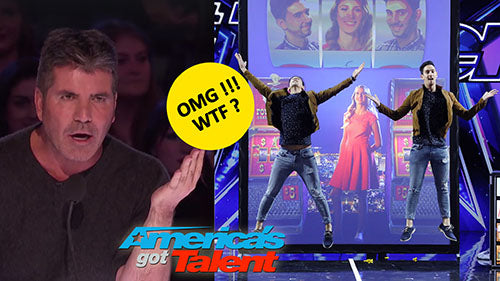
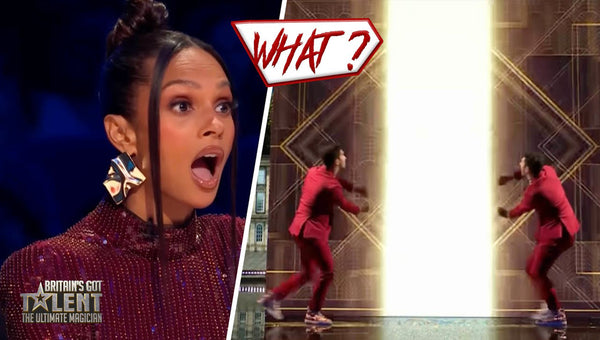
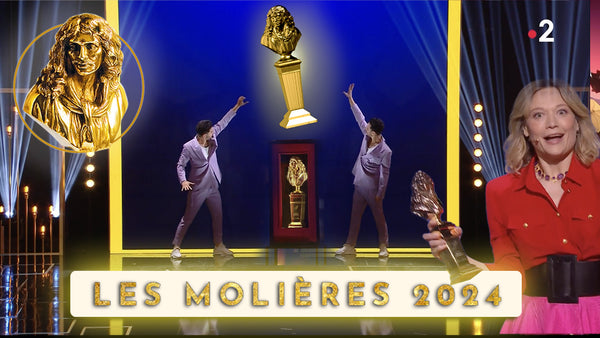
Within the French-language market, the twin illusionists Tony and Jordan, known professionally as Les French Twins, developed a corporate format titled "CEO Apparition" that uses real-time compositing to produce a photorealistic representation of a client's senior executive during a keynote presentation. The format was developed between 2019 and 2022 and sits in direct conceptual lineage with Tempest's central argument: illusion works at its highest level when it is anchored to something the audience genuinely needs to believe. Their positioning in the Fortune 500 convention market is analyzed in a separate piece on this publication.
Why TED rather than a competition or a residency
The question is worth examining: why did TED function as the launch platform for this aesthetic shift rather than a magic competition, a Las Vegas residency, or a television special? Part of the answer is structural. TED distributes its talks under a Creative Commons license, which meant Tempest's performances circulated freely across YouTube, embedded posts, and industry newsletters without friction or paywall, reaching audiences far larger than the magic specials of the same era.
The deeper reason was contextual. A TED audience includes engineers, investors, designers, and researchers with active professional stakes in the ideas being presented. When Tempest demonstrated that AR overlays could transform human perception of physical objects in real time, he was demonstrating it to an audience capable of immediately mapping commercial and institutional applications. TED did not exhibit Tempest's work. It distributed demand for what his work represented.
Magic gatherings have since leaned into the same themes, with technology tracks and panels appearing at major conventions and professional meetings. These venues matter within the trade. None replicates the distribution mechanism that TED operates at scale.
The category in 2026
By 2026, AI illusion functions as a recognized premium tier within the live entertainment economy rather than a specialist niche. Technology riders specifying projection throw distances, LED pixel pitch, network infrastructure, and advance briefing windows of several weeks have become contractually standard. The production infrastructure now required for contemporary stage illusion routinely demands dedicated technical coordination on both the act's side and the venue side. Several leading acts operate proprietary software developed in-house, placing them commercially closer to technology licensors than to traditional entertainers. The equipment infrastructure that top-tier acts carry reflects a level of investment that would have been unthinkable for a traveling performer in 2010.
What has not changed is the principle Tempest demonstrated on the TED stage: the technology works only when the performer has a specific, defensible idea to express with it. The acts now listed as alternatives to Tempest for technology event bookings share this quality across differences in nationality, price point, and performance style. The market has learned that a hologram projector without a conceptual frame produces a worse result than a well-constructed routine performed with a borrowed object. The most reliable equipment a technology illusionist travels with is still not in the flight cases. It is the argument.
Marco Tempest continues to perform, consult, and lecture on the intersection of magic and technology, and maintains a selective booking calendar for cultural institutions and private clients. The category he helped construct across those TED years advocates for itself.